Acne scars can be stubborn in a very specific way – not always dramatic enough to justify constant clinic visits, but noticeable enough to affect how your skin looks in natural light, makeup, and photos. That is exactly why microneedling for acne scars at home has become such a practical option for people who want visible skin-texture improvement with more control, less expense, and less disruption to their routine.
Done correctly, at-home microneedling can help soften the look of certain acne scars by supporting the skin’s natural repair process. It is not a magic fix, and it is not right for every scar type or every skin condition. But for many people dealing with mild to moderate textural scarring, it can be one of the most effective at-home treatments available.
How microneedling for acne scars at home works
Microneedling creates controlled micro-channels in the skin using fine needles. This process encourages the skin to renew itself and can support collagen production over time. When acne scarring is tied to uneven texture, especially shallow atrophic scars, that collagen response is the reason microneedling gets so much attention.
The key phrase here is over time. Acne scars usually form over months or years, and improving them is also gradual. Most people will not see meaningful change after one session. Consistency, proper technique, and appropriate needle depth matter far more than doing an aggressive treatment once.
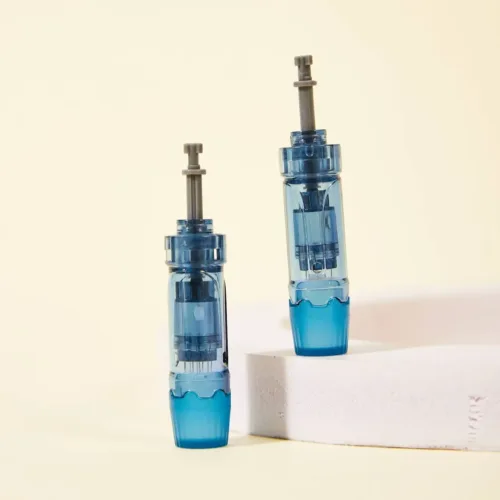
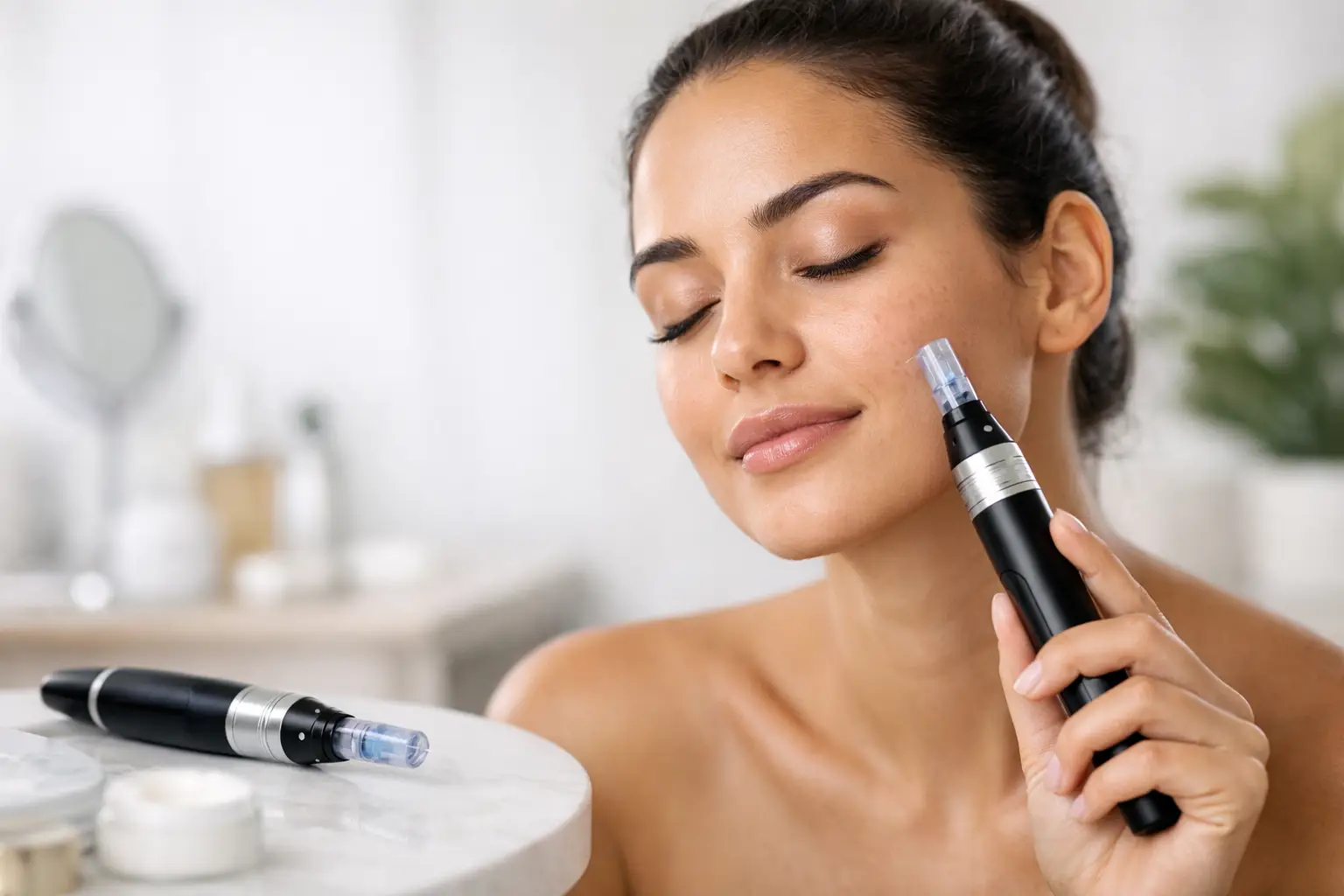
At-home devices are designed to give users more precision and control than old-style dermarollers. A quality microneedling pen with adjustable depth and single-use cartridges can make the process more hygienic, more even, and easier to tailor to different areas of the face.
Which acne scars respond best
Not all acne scars behave the same way, so expectations should match the scar type. Rolling scars and some boxcar scars often respond better because they involve depressed texture that may improve as the skin remodels. Shallow unevenness can also look smoother after a series of treatments.
Ice pick scars are more difficult. They are narrow, deep, and often need more advanced professional treatment. Raised scars are another category where at-home microneedling may not be the right first approach. If you have active acne, inflamed breakouts, skin infection, rosacea flare-ups, or a history of poor wound healing, you should pause and reassess before treating at home.
This is where realistic expectations protect results. Microneedling can improve the appearance of scars. It does not erase every mark completely, and deeper scars usually need a longer timeline or combination treatment strategy.
What makes an at-home treatment safer and more effective
The difference between a good at-home microneedling experience and a bad one usually comes down to control, hygiene, and restraint. Professional-style devices that use disposable cartridges and adjustable needle depth offer a major advantage because they let you treat with more consistency.
For acne scars, precision matters. You want enough stimulation to encourage skin renewal, but not so much trauma that you create unnecessary irritation or prolong downtime. Going deeper is not automatically better. More aggressive settings can increase redness, sensitivity, and the risk of post-inflammatory pigmentation, especially in deeper skin tones or reactive skin.
A clean routine matters just as much as the device itself. Skin should be thoroughly cleansed, cartridges should be new and single-use, and the treatment area should be handled carefully before and after the session. This is not the time for shortcuts.
Before you start, make sure your skin is a good candidate
At-home microneedling works best when the skin barrier is reasonably healthy. If your skin is already irritated from over-exfoliation, strong retinoids, harsh acne products, or recent peels, it makes sense to wait. Treating compromised skin can increase inflammation and make recovery harder.
You should also think about your current acne status. If you still have frequent active breakouts, microneedling may spread bacteria or aggravate inflamed areas. In that case, acne control should come first, scar work second.
A patch test mindset is helpful even with experienced skincare users. Start conservatively, monitor how your skin responds, and build your schedule based on recovery rather than impatience.
A practical approach to treatment
For most users, the best at-home routine is simple and disciplined. Start with clean skin and a fresh cartridge. Use a needle depth that is appropriate for home use and for the area you are treating. Move the pen evenly without dragging, and avoid repeatedly overworking the same spots.
You do not need to chase pinpoint bleeding to get results. Mild redness is common. Excessive trauma is not a sign of a better session.
After treatment, keep skincare basic. Hydrating, non-irritating formulas are usually the right move. This is not the night for exfoliating acids, retinoids, fragranced products, or anything that stings. Sun protection over the following days is essential because freshly treated skin is more vulnerable.
A lot of users get better results by treating less aggressively but more consistently. Depending on needle depth and skin sensitivity, spacing sessions out properly gives the skin time to repair and respond. Over-treating can slow progress instead of speeding it up.
What results to expect and when
The first changes people notice are often not the scars themselves. Skin may look a little fresher, smoother, or more refined in texture before deeper scar improvement becomes obvious. That is normal. Surface glow usually appears sooner than structural remodeling.
Acne scar improvement tends to show up gradually across a series of treatments. For mild textural scarring, some users notice visible softening within a couple of months. Moderate scars usually take longer. The timeline depends on scar type, depth, skin health, treatment consistency, and aftercare.
There is also a limit to what at-home treatment can do on its own. If your scars are deep, sharply indented, or mixed with pigmentation and ongoing breakouts, the best strategy may be partial at-home improvement combined with professional guidance. That does not make microneedling less worthwhile. It just means the right goal may be smoother, more even-looking skin rather than perfection.
Common mistakes that hold results back
One of the most common mistakes is treating active acne as if it were scar tissue. Another is using poor-quality tools or reusing cartridges, which can compromise both hygiene and performance. Some users also undermine progress by layering on strong skincare too soon after treatment.
There is also a tendency to rush depth. People often assume deeper settings must produce faster scar correction, but skin does not reward impatience. Controlled treatment, proper intervals, and consistent recovery support usually outperform aggressive sessions followed by irritation.
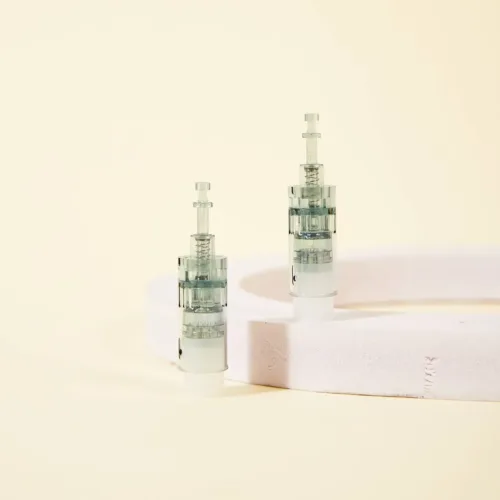
Technique matters too. Uneven passes, pressure that is too heavy, or inconsistent coverage can lead to patchy results. This is why many skincare-conscious buyers prefer a device that offers stable performance, depth control, and model-specific disposable cartridges.
Choosing the right device for acne-scar concerns
If your goal is scar improvement, look for a microneedling pen that prioritizes precision, hygiene, and adjustability. Those features are not marketing extras. They directly affect how evenly and safely you can treat the skin at home.
A reliable pen should allow you to customize depth by area, because the forehead, cheeks, and delicate zones do not all need the same setting. Disposable cartridges are equally important for skin safety and consistent performance. Authentic devices also matter. Counterfeit or low-grade tools can create unpredictable results, which is the opposite of what you want when treating scarred skin.
That is one reason many users shop through a specialist source like Dr. Pen Official Store. When you are investing in a device for long-term skin improvement, authenticity, cartridge compatibility, and after-purchase support make a real difference.
Is microneedling for acne scars at home worth it?
For the right person, yes. If you have mild to moderate textural acne scars, want more control over your skincare routine, and are willing to be consistent, at-home microneedling can be a strong option. It offers a practical middle ground between topical products that barely touch scar texture and in-office treatments that may be harder to maintain regularly.
The biggest advantage is not just cost savings. It is access. You can stay consistent, track your skin’s response, and build a treatment routine that fits real life. The trade-off is that results depend heavily on using the right device, following safe technique, and respecting your skin’s limits.
If you approach it like a precision treatment rather than a shortcut, microneedling can become one of the most rewarding parts of a results-focused skincare plan. Better skin texture rarely comes from doing the most. More often, it comes from doing the right thing well, then giving your skin time to respond.