Using the wrong depth is where most at-home microneedling mistakes start. A solid microneedling needle depth guide helps you match the treatment to the skin concern, the area you are treating, and your experience level – so you can aim for visible results without pushing your skin further than it needs to go.
Depth matters because microneedling is not a one-setting treatment. The thin skin around the eyes does not respond the same way as the forehead. Post-acne texture is different from mild dehydration lines. And deeper is not automatically better. In many cases, a conservative setting used consistently gives better skin quality, less downtime, and a safer at-home routine.
How to use a microneedling needle depth guide
Think of needle depth as a precision setting, not a power setting. The goal is to create controlled micro-channels in the right layer of skin for the concern you want to target. If you stay too shallow, you may improve product absorption but get limited remodeling. If you go too deep, you increase redness, discomfort, and recovery time without necessarily improving the outcome.
Skin thickness varies across the face and body, which is why one universal number does not work. Device performance, cartridge design, pressure, and pass count also affect intensity. That is why depth ranges are more useful than one exact number.
For most at-home users, the safest approach is to begin at the lowest effective depth and increase only when your skin tolerates treatment well. That usually means less inflammation and more predictable progress over time.
Recommended microneedling depths by area
These ranges are general at-home guidance, not a medical prescription. If you have active acne, eczema, rosacea flares, open wounds, a skin infection, or a history of poor wound healing, microneedling may not be appropriate until the skin is stable.
Forehead
The forehead is often thinner than people expect, especially near the temples. A range around 0.25 mm to 0.5 mm is commonly enough for product absorption and mild texture support. For more visible lines or shallow acne scarring, some experienced users may work up to 0.75 mm, but that depends on skin tolerance and device control.
Cheeks
The cheeks usually tolerate more depth because the skin is thicker. Around 0.5 mm to 1.0 mm is a common range for texture, enlarged pores, and general rejuvenation. For acne scar concerns, experienced users may use the higher end of that range. Going deeper is where caution becomes more important, especially at home.
Nose
The nose is tricky. Skin can seem thick because of oiliness and visible pores, but the contours make treatment less predictable. Around 0.25 mm to 0.5 mm is usually enough. The goal here is usually refinement, not aggressive treatment.
Under-eye and orbital area
This area needs the most restraint. Around 0.2 mm to 0.25 mm is typically the safer range for enhancing absorption and gently supporting fine lines. Pressure should stay very light, and the mobile eyelid should be avoided unless you are specifically trained and using an appropriate protocol.
Upper lip
The skin above the lip is delicate and sensitive. A range of 0.25 mm to 0.5 mm is often appropriate, depending on the goal. It can be an effective area for fine vertical lines, but discomfort tends to feel stronger here even at modest depth.
Chin and jawline
These areas often handle 0.5 mm to 0.75 mm well for texture and early signs of aging. If breakouts are active, treatment should wait. Microneedling over inflamed acne can spread irritation and compromise healing.
Neck
The neck responds well to conservative settings. Around 0.25 mm to 0.5 mm is typically enough. More depth is not usually the answer here because the skin is thinner and can become irritated faster than facial skin.
Body areas and stretch marks
Stretch marks and body texture often require more depth than facial rejuvenation. Depending on the area, users may work in the 0.75 mm to 1.5 mm range, but this is where experience, skin response, and technique matter more. Body skin can be thicker, but that does not mean it should be treated aggressively by default.
Needle depth by skin goal
If your main goal is better serum absorption and a fresher look, shallow depths around 0.2 mm to 0.3 mm are often enough. This type of treatment usually comes with minimal downtime and works well for maintenance.
For fine lines, uneven tone, and mild texture, many users see good results in the 0.25 mm to 0.5 mm range, depending on the area. This is often the sweet spot for regular at-home treatments because it balances visible improvement with manageable recovery.
For acne scars and more pronounced texture concerns, treatment often moves into the 0.5 mm to 1.0 mm range on appropriate facial areas. That does not mean every scar should be treated at the deepest setting available. Scar type matters. Rolling scars, boxcar scars, and post-inflammatory marks all respond differently.
For stretch marks or thicker body skin, deeper settings may be used, but results come from repeated, controlled sessions over time. There is rarely a benefit in treating any area deeper than your skin can comfortably recover from.
Why deeper is not always better
A common misunderstanding is that more depth means more collagen. In reality, results depend on controlled injury, not maximum injury. If your skin is excessively inflamed, if healing is delayed, or if you are left with prolonged redness, you may be doing more than your skin can efficiently repair.
This is especially relevant for at-home users. Professional providers may use deeper settings in a clinical environment with advanced protocols, assessment, and follow-up. At home, the better standard is precision, hygiene, and consistency. Professional-looking results come from respecting the skin barrier, not overpowering it.
Factors that change the right depth
Your ideal setting is shaped by more than location. Skin sensitivity, hydration, age, barrier health, and previous microneedling experience all play a role. Two people treating their cheeks for texture may not need the same depth.
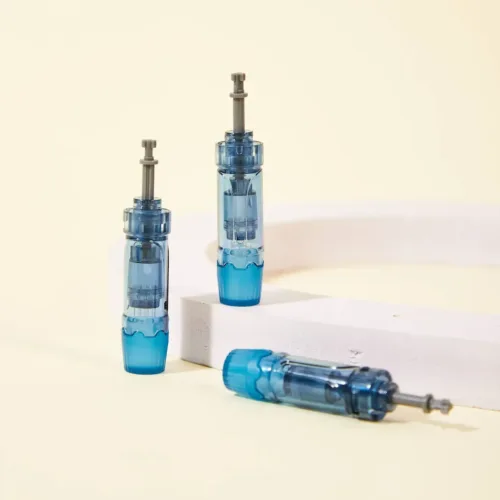
Device quality also matters. Adjustable-depth pens allow more control than fixed systems, which is important when moving between delicate and thicker zones in one session. Cartridge quality, needle sharpness, and motor consistency influence how the skin experiences each pass. That is one reason many users prefer authentic, model-matched cartridges and reliable pens from a specialized source such as Dr. Pen Official Store.
Technique matters just as much as the number on the dial. Heavy hand pressure, repeated passes over the same spot, and poor glide can make a moderate depth behave like a much more aggressive treatment. A conservative setting with proper technique usually outperforms a high setting used carelessly.
Signs your depth may be too shallow or too deep
If your treatment feels like it is doing nothing at all, and you see no temporary pinkness or progression over time, your depth may be too shallow for your goal. That said, subtle treatments can still be effective for maintenance and absorption.
If you are seeing pinpoint bleeding across large areas, strong swelling, lingering heat, or redness that lasts far beyond the expected window, your treatment may be too deep, too frequent, or too intense overall. More downtime is not proof of better treatment.
Your skin should look challenged, not traumatized. Mild to moderate redness for a limited period is common. Persistent irritation is your cue to scale back.
Safer at-home depth habits
Start low, especially if it is your first treatment or you are using a new device. Treat one concern at a time and give your skin enough recovery between sessions. Keep your cartridges single-use, your device clean, and your skin properly prepped.
Avoid strong acids, retinoids, and other potentially irritating actives right before and right after treatment unless your protocol specifically allows them. Sun protection matters even more after microneedling because freshly treated skin is more vulnerable to irritation and discoloration.
The best microneedling routine is one you can repeat safely. Adjustable depth is valuable because skin is not uniform, and your routine should not be either.
If you are unsure where to begin, begin with the gentlest setting that makes sense for your goal and area. Skin responds best to treatment that is measured, clean, and consistent – and that is usually where the real improvement starts.